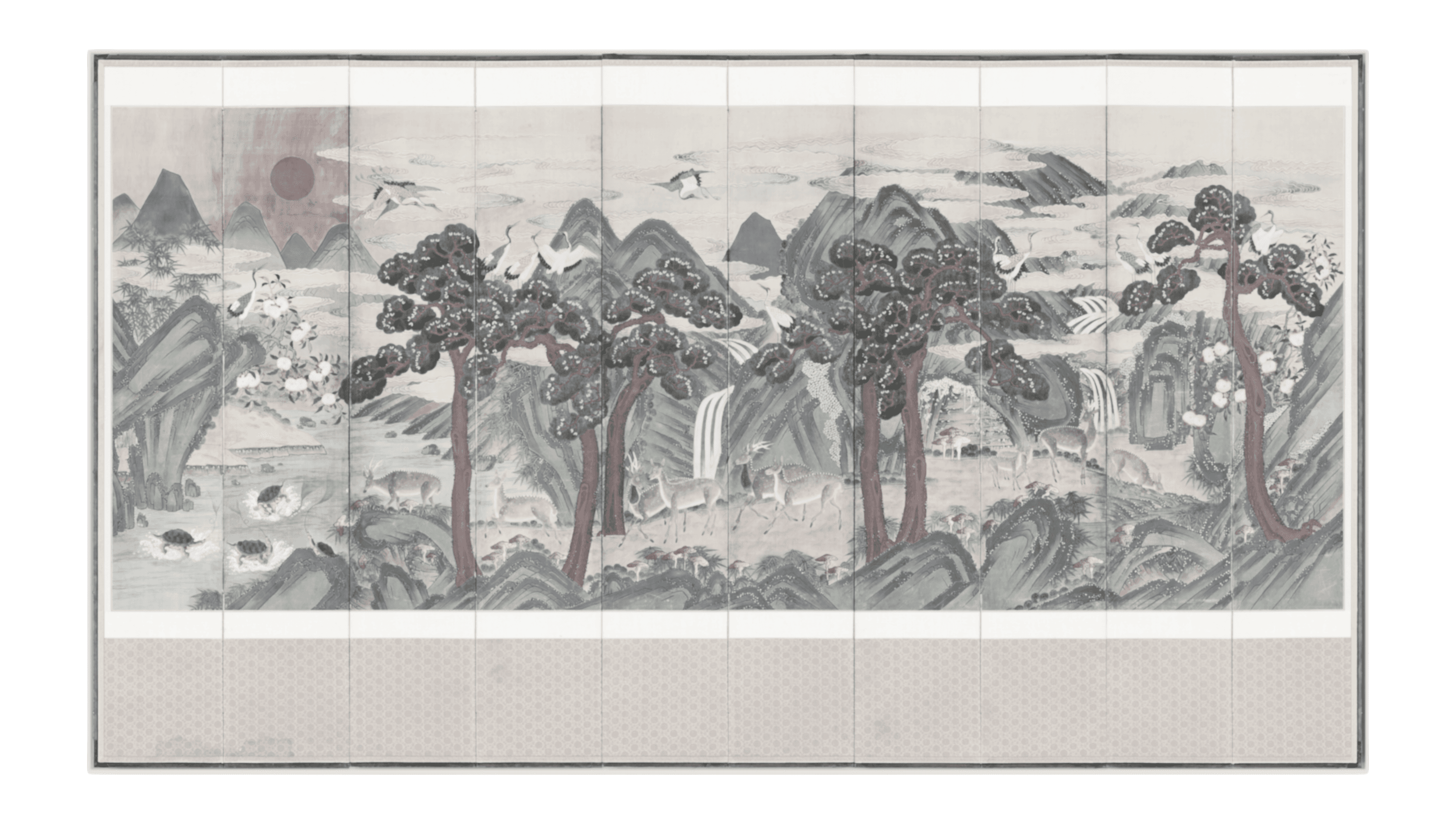
Opening
Saju is the Korean Four Pillars tradition, closely related to the East Asian system often introduced internationally through BaZi terms.
The word Saju means “four pillars.” These four pillars come from the year, month, day, and hour of birth. Each pillar is written with two traditional signs, and together they form eight characters.
At first, terms like Heavenly Stems and Earthly Branches may sound unfamiliar. In simple terms, they are traditional calendar signs used to describe time, season, balance, and change.
Saju does not say that your life is fixed. It offers a cultural lens for understanding your nature, tendencies, relationships, and life rhythm.
Chapter 01 — The Four Pillars
A Saju chart begins with four pillars: the Year Pillar, Month Pillar, Day Pillar, and Hour Pillar.
Think of them like four columns in a profile. One column represents the year you were born, another represents the month, another the day, and another the hour. Together, they create a symbolic snapshot of your birth moment.
In BaZi terms, each pillar contains two parts: a Heavenly Stem and an Earthly Branch. These names may sound mysterious, but the idea is simple. The upper sign, called the Heavenly Stem, shows the more visible quality of that moment. The lower sign, called the Earthly Branch, holds a deeper layer connected to season, time, and hidden influences.
So a Saju chart is not just a birthday written in another language. It is a structured way to read how different signs interact with one another.
Chapter 02 — Heavenly Stems and Earthly Branches
Heavenly Stems and Earthly Branches are two of the most important terms in BaZi and Saju.
Heavenly Stems are the 10 upper signs. They are connected with Yin and Yang and the Five Elements: Wood, Fire, Earth, Metal, and Water. You can think of them as ten symbolic “energy labels” used in the old calendar system.
Earthly Branches are the 12 lower signs. They are often connected with the 12 zodiac animals, such as Rat, Ox, Tiger, Rabbit, Dragon, and so on. But they are not only animal signs. In Saju, they also represent seasons, months, time blocks, and hidden inner qualities.
A simple way to imagine it is this: the Heavenly Stem is like what appears on the surface, and the Earthly Branch is like what is stored underneath. Together, they create a pair. That pair becomes one pillar.
Chapter 03 — The Eight Characters
Because each of the four pillars has two signs, a full Saju chart contains eight characters. This is why Saju is also called Saju Palja in Korean. Palja means “eight characters.”
These eight characters are not read separately. They are read together, like instruments in an orchestra. One sign may be strong. Another may be weak. One may support another. One may create tension with another.
A Saju reading studies this whole pattern.
For example, if one element appears too strongly, the chart may feel heavy in that direction. If another element is missing or weak, the reading may look at how that missing quality affects personality, relationships, work style, or emotional balance.
The goal is not to label a person as good or bad. The goal is to understand the shape of the chart.
Chapter 04 — Yin-Yang and the Five Elements
Saju is built on two major ideas: Yin-Yang and the Five Elements.
Yin and Yang describe two different modes of energy. Yin is often linked with quietness, depth, reflection, and inward movement. Yang is often linked with brightness, action, expression, and outward movement.
The Five Elements are Wood, Fire, Earth, Metal, and Water. These are not just physical materials. In Saju, they work more like symbolic languages.
Wood can suggest growth, planning, and expansion. Fire can suggest warmth, visibility, passion, and expression. Earth can suggest stability, responsibility, and grounding. Metal can suggest structure, standards, focus, and refinement. Water can suggest depth, flexibility, movement, and thought.
A chart becomes meaningful when we see how these qualities mix. Just like a person is not made of one emotion, a Saju chart is not made of one element. It is a living balance of many qualities.
Chapter 05 — The Day Master
One of the most important ideas in a Saju reading is the Day Master.
The Day Master is the Heavenly Stem of the day you were born. In simple terms, it is the main character of the chart. When a Saju reader looks at a chart, they often begin by asking: “What kind of energy is this person centered around?”
For example, if the Day Master is connected with Earth, the reading may begin by looking at stability, responsibility, patience, or heaviness. If it is connected with Water, the reading may begin with flow, thought, flexibility, or emotion.
But the Day Master is never judged alone. Its meaning changes depending on the season, the other signs around it, and whether the chart supports or challenges it.
This is why Saju is not as simple as saying, “You are a Fire person” or “You are a Water person.” The whole structure matters.
Chapter 06 — Saju in Korean Tradition
The system now known as Saju-Myeongri became more fully established in Korea from the late Goryeo period onward and continued to develop through the Joseon dynasty.
Over time, Saju became part of Korean cultural life. People used it to think about personality, timing, relationships, career direction, marriage, naming, and important life decisions.
Today, we do not need to approach Saju as an absolute prediction. A more careful way to understand it is as a traditional interpretation system. It shows how people in Korean culture connected human life with time, nature, season, and symbolic order.
In that sense, Saju is not only a personal reading. It is also a cultural artifact.
Chapter 07 — How a Saju Reading Works
A Saju reading does not simply ask, “Is this lucky or unlucky?” A better question is: “What kind of pattern does this chart show?”
The reader looks at the Day Master, the season, the Five Elements, the balance of the chart, and the relationships between signs. Some signs may support each other. Some may clash. Some may combine. Some may reveal pressure, talent, emotion, ambition, or hidden strength.
This is similar to reading a map. A mountain on a map is not good or bad. A river is not good or bad. But if you understand where the mountains and rivers are, you can understand the shape of the land.
Saju works in a similar way. It helps you understand the shape of your inner landscape.
Chapter 08 — The SORAM-SAJU Approach
SORAM-SAJU keeps the traditional BaZi and Korean Saju terms, because the original language carries cultural depth. But we do not leave those terms unexplained.
When we use a term like Heavenly Stem, we also explain it as one of the 10 upper signs in the old calendar system. When we use Earthly Branch, we explain it as one of the 12 lower signs connected with season, time, and hidden layers. When we use Day Master, we explain it as the main character of your chart.
Our goal is to make Saju understandable without making it shallow.
We translate the structure of your chart into clear language, so you can understand your nature, your tendencies, your relationships, and your rhythm of change.
We do not see Saju as a system that tells you who you must become. Instead, we see it as a way to better understand who you already are.